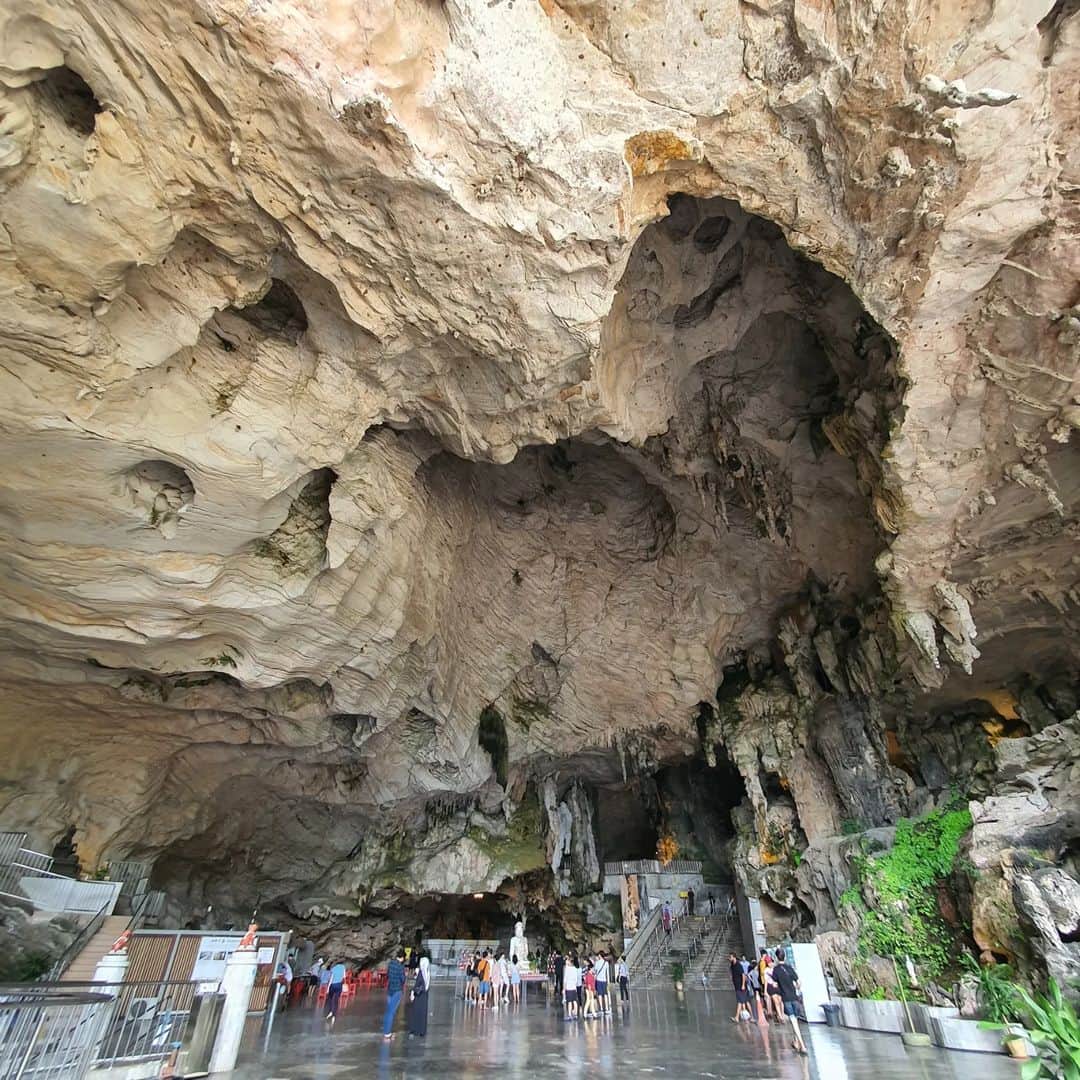
Ipoh sits in a valley surrounded by limestone hills, and over centuries those hills have been hollowed out by water into a network of caves. Buddhist and Taoist communities have turned several of these caves into temples, carving shrines into the rock and building altars beneath natural skylights. The result is a collection of cave temples that are among the most atmospheric places of worship in Malaysia, and they are all free to visit.
Sam Poh Tong: The Oldest
Sam Poh Tong is considered the oldest cave temple in Ipoh, founded in 1912 by a Chinese Buddhist monk who discovered the cave while meditating. The temple is located in Gunung Rapat, a limestone hill that contains several cave temples in close proximity. The entrance to Sam Poh Tong is through a traditional Chinese archway that leads to a garden, where a large statue of Buddha sits in the open air. From there, a short climb of 246 steps takes you to an upper cave shrine, though the main worship area is at ground level inside the cave itself.
The cave's interior is dim and cool, with statues of Buddhist deities arranged in niches along the rock walls. The ceiling is high and natural light filters in through openings in the rock, creating an otherworldly atmosphere. A turtle pond near the entrance is a popular spot, as visitors release turtles here as a form of merit-making. The temple is located at Jalan Gopeng and is open daily from 7am to 5pm. Admission is free, though donations are accepted.
Perak Tong: The Best Murals
Perak Tong, located at Jalan Tuk Badak off Jalan Kuala Kangsar, is known for having the most impressive murals among Ipoh's cave temples. Founded in 1926 by a Buddhist priest, the temple is built into a limestone hill and features a series of colorful murals painted on the cave walls, depicting scenes from Buddhist scripture and Chinese mythology. The murals were painted over several decades, and some have faded, but the overall effect is still striking.
The cave itself is large, with a high ceiling and multiple chambers. A steep staircase of 385 steps leads from the main cave to a lower summit, where a pavilion offers panoramic views of the surrounding countryside. The climb is strenuous, especially in the heat, so bring water and take breaks. The view from the top takes in the limestone hills that ring Ipoh and, on a clear day, stretches all the way to the Titiwangsa Mountains. Perak Tong is open daily from 7am to 6pm and admission is free.
Kek Lok Tong: The Largest And Most Dramatic
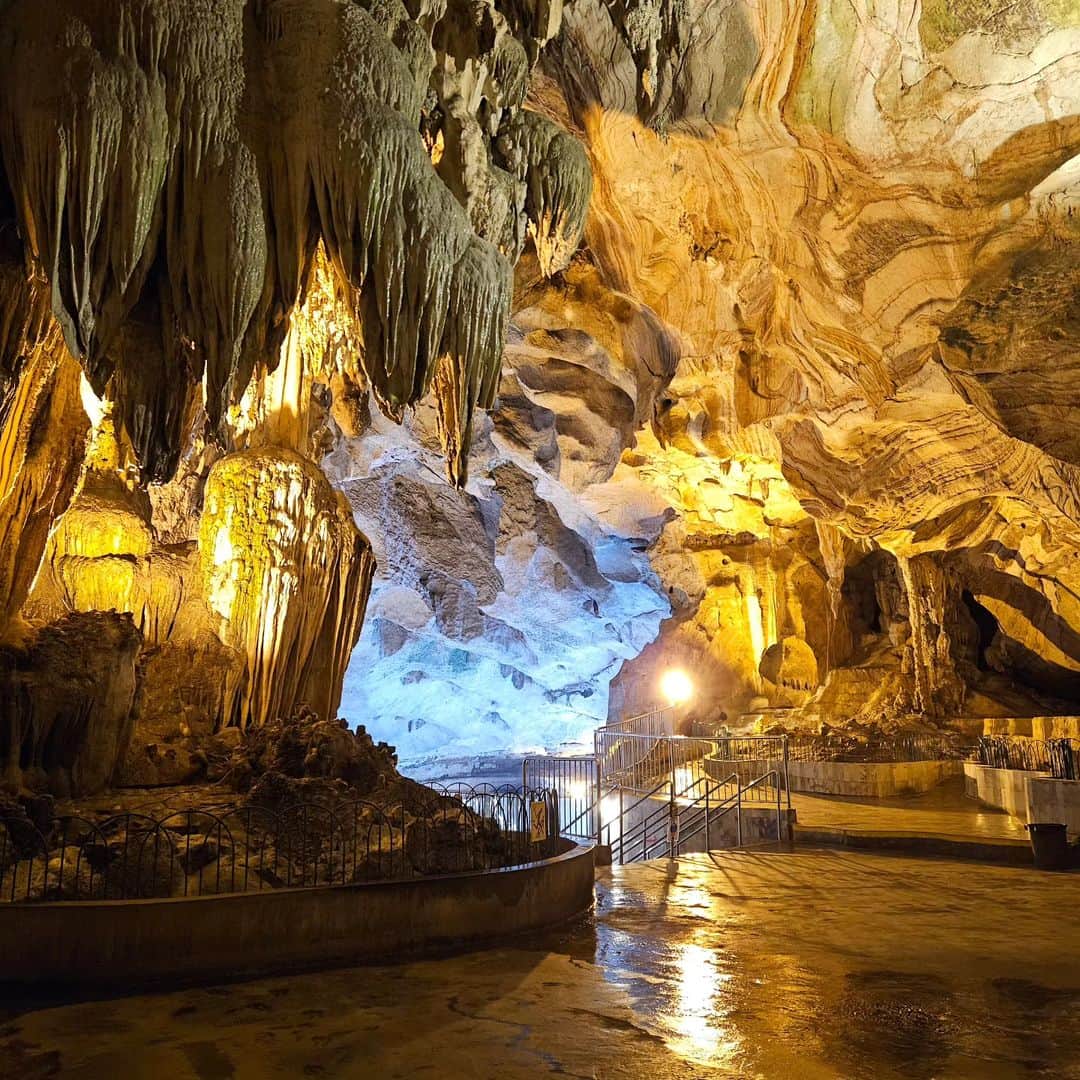
Kek Lok Tong, whose name means "Cave of Ultimate Bliss," is the largest of Ipoh's cave temples and arguably the most dramatic. Located at Persiaran Sepakat 3, Taman Endah Jaya, the temple sits at the foot of Gunung Rapat and features an enormous cave mouth that serves as a natural entrance. The cave's interior is vast, with Buddha statues arranged beneath stunning rock formations that hang from the ceiling. The scale of the space is what sets Kek Lok Tong apart from the other cave temples, it feels less like a temple built inside a cave and more like a cathedral.
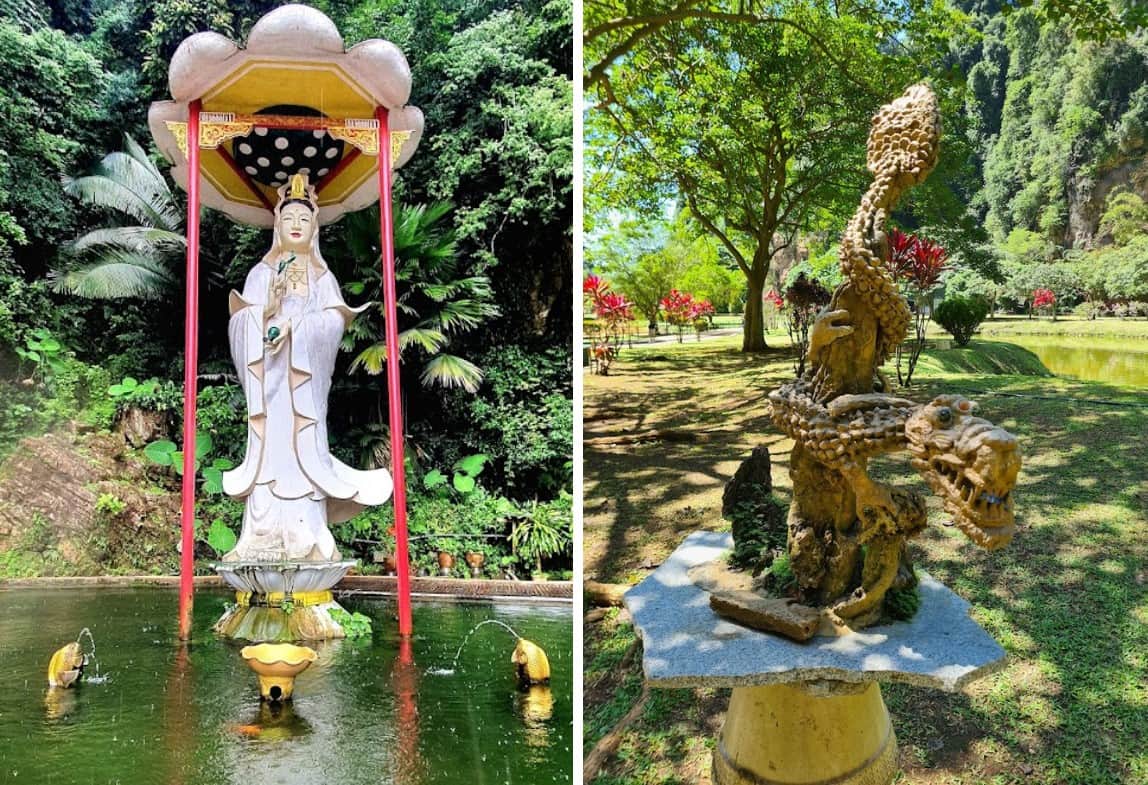
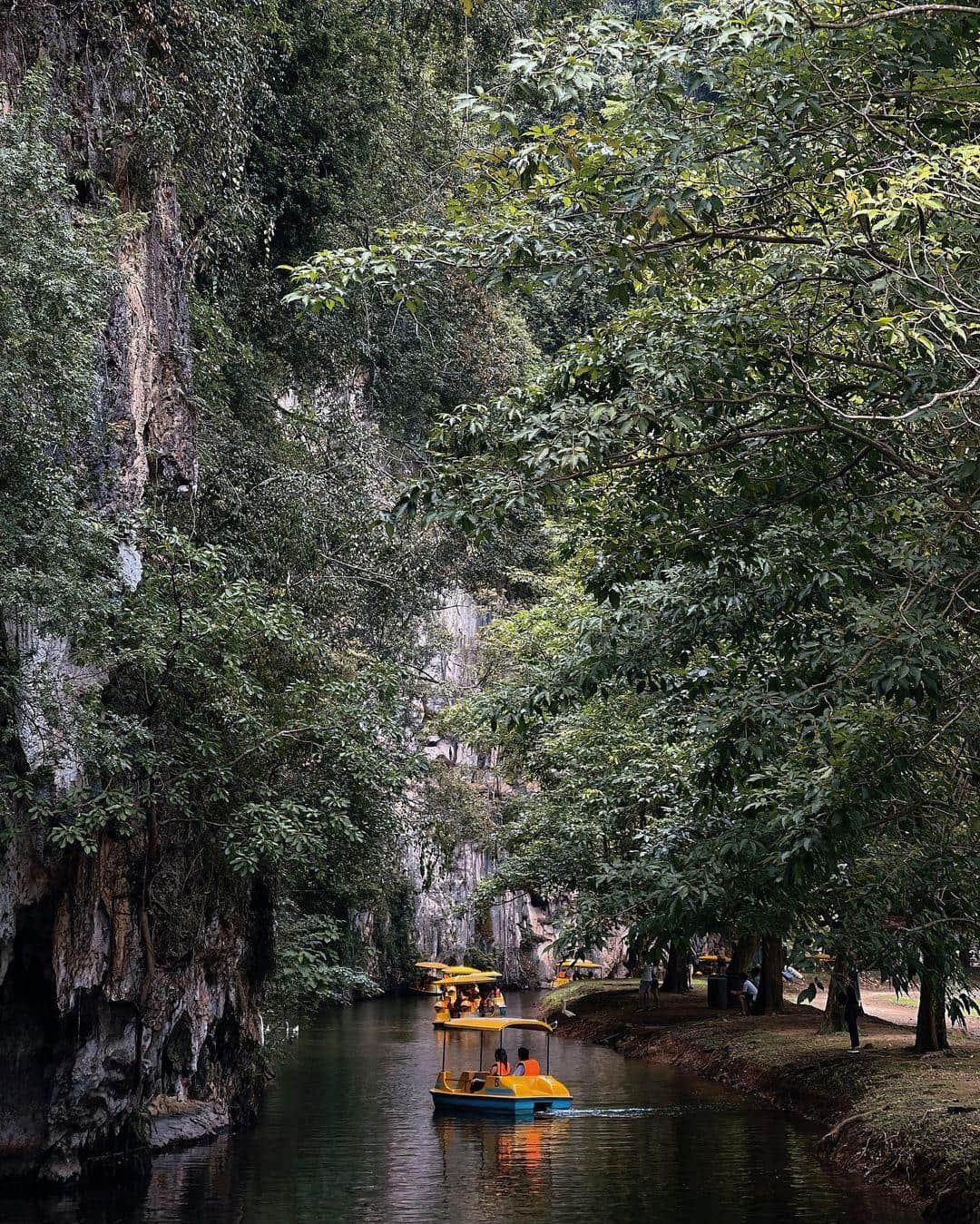
Beyond the main cave, Kek Lok Tong has a zen garden at the rear of the cave complex, accessible through a passage at the back of the cave. The garden features a lake, rock carvings of Taoist deities and mythical creatures, and walking paths. You can take a boat ride on the lake for RM12 for two people, a 30-minute ride that meanders along rocky cliffs dotted with greenery. The boat rides are available from Wednesday to Monday, and the temple is open daily from 8am to 4.30pm.
Practical Information
All three cave temples have free admission, though donations are appreciated. There are no formal dress codes enforced, but as these are active places of worship, modest dress is expected. That means covering your shoulders and knees, which means no tank tops or shorts. Some temples provide sarongs for loan if you arrive underdressed, but don't count on it. Wear comfortable walking shoes, as all three temples involve some climbing, and the paths can be steep and uneven.
The best time to visit is in the morning, between 8am and 11am, when the caves are cool and the light is at its best. Afternoon visits can be hot, and the caves can get crowded with tour groups after lunch. Bring water and a flashlight, as some of the darker corners of the caves can be hard to navigate. Photography is allowed in most areas, but be respectful of worshippers and avoid using flash near altars.
Getting There And Between Temples
The cave temples are spread across Ipoh, and visiting all three in a single day requires some planning. Sam Poh Tong and Kek Lok Tong are both located on the southern side of Ipoh, near Gunung Rapat, and are about a 10-minute drive apart. Perak Tong is on the northern side of the city. If you're driving, allow about half a day to visit all three. If you're relying on Grab or taxis, expect to pay around RM15 to RM25 between temples.
Many visitors combine a visit to the cave temples with a stop at Tasik Cermin, the mirror lake that sits just a stone's throw from Sam Poh Tong. The lake was formerly an abandoned quarry that has been transformed into a geopark, with a 25-minute boat ride (RM25 per person) that travels between two lakes through a tunnel. Admission to Tasik Cermin is RM5 per person, and it's open daily from 9am to 6pm. The combination of cave temples and the lake makes for a full day of exploring Ipoh's natural and spiritual heritage.
The limestone hills around Ipoh contain nearly 30 cave temples in total, and the three described here are just the most accessible. If you have more time, Ling Sen Tong and Nam Thean Tong are two smaller temples near Sam Poh Tong that are worth a quick visit. Each cave has its own character, and spending a day temple-hopping through the limestone hills is one of the most rewarding ways to experience the spiritual and geological landscape that makes Ipoh unique.